Physical Address
304 North Cardinal St.
Dorchester Center, MA 02124
Physical Address
304 North Cardinal St.
Dorchester Center, MA 02124


Learning Mandarin Chinese independently might seem daunting, but millions of successful self-taught learners prove it’s entirely achievable. Teaching yourself Chinese requires dedication, strategy, and the right resources, but with proper guidance, you can make great progress without enrolling in formal chinese classes. Years ago, self-study resources for Chinese were limited, but today independent learners have access to a wide range of tools and materials.
This comprehensive guide will walk you through everything you need to know about learning chinese online and developing your chinese skills through self-study. Whether you’re drawn to China’s rich culture, planning business ventures, or simply love learning languages, this step by step guide will help you start learning chinese effectively from day one.
The chinese language presents unique challenges for English speakers, but understanding these obstacles upfront will help you navigate them successfully. Mandarin is often considered a difficult language due to its complex writing system, but its grammar and lack of verb conjugations can make it easier to learn than many expect. With consistent daily practice and the right approach, you can start speaking chinese and reading chinese characters within months of beginning your journey.
The Chinese language stands as one of the most influential and fascinating languages in the world, with a history that spans thousands of years and a culture that continues to shape global trends. Mandarin Chinese, the official language of China, is spoken by over 1.3 billion people not only in China but also in Taiwan, Singapore, Malaysia, and Chinese communities worldwide. As the most widely spoken language on the planet, learning Chinese opens doors to international business, travel, and cultural exchange.
For anyone looking to learn Chinese, understanding the basics is essential. The language is built on Chinese characters, a unique writing system that represents both meaning and sound. Mastering Chinese grammar and pronunciation is equally important, as these elements form the foundation for effective communication. Fortunately, the rise of learning Chinese online has made it easier than ever to access high-quality resources. Popular platforms like Yoyo Chinese and Integrated Chinese offer structured lessons, interactive exercises, and practical tips for learners at every level. Whether you’re interested in Chinese for business, travel, or personal enrichment, there are countless resources available to help you start learning Chinese and make steady progress on your language learning journey.
Before diving into chinese vocabulary and chinese grammar, you need to establish a solid foundation for your self-study journey. Successful chinese language learners understand that preparation and goal-setting determine long-term success. When starting a new language like Chinese, it is crucial to build a strong foundation to ensure steady progress and avoid common pitfalls that can arise when learning any new language.
Define your specific learning goals clearly from the start. Are you planning to travel to China and need basic conversational skills? Do you want to conduct business with chinese people and require professional-level fluency? Are you preparing for the hanyu shuiping kaoshi (HSK) exam? Or are you drawn to chinese culture and want to understand films, literature, and traditions in their original language? Your goals will shape every decision about learning material, time allocation, and practice methods.
Allocate realistic daily study time based on your schedule and commitments. Research shows that 30-60 minutes of focused daily practice produces better results than sporadic intensive sessions. Most successful self-taught learners dedicate at least 45 minutes daily to their chinese skills development, but even 20-30 minutes consistently applied will yield significant progress over time.
Choose between simplified chinese characters and traditional characters early in your journey. Simplified chinese characters are used in mainland China and Singapore, making them the most practical choice for most learners. Traditional characters remain standard in Taiwan, Hong Kong, and Macau. Unless you have specific reasons to learn traditional characters, simplified chinese characters offer easier entry into the language and broader practical application.
Understand realistic timelines for chinese language learning. The US Foreign Service Institute estimates that english speakers need approximately 2,200 class hours to reach proficiency in mandarin chinese – that’s roughly 88 weeks of intensive study. Learning Chinese as a foreign language presents unique challenges, and compared to other foreign languages, it often requires more time and effort due to its writing system and tonal pronunciation. However, many self-taught learners achieve conversational ability within 6-12 months through focused daily practice and immersion techniques.

Create a dedicated study space equipped with all necessary materials and technology. Your space should include a computer or tablet for accessing online resources, notebooks for writing practice, and a quiet environment free from distractions. Having everything ready eliminates friction and makes it easier to maintain your daily schedule.
Pinyin serves as the foundation for all mandarin chinese pronunciation and must be mastered before progressing to more advanced skills. This romanization system uses familiar latin letters to represent chinese sounds, making it the bridge between english and chinese pronunciation.
Master all 21 initials and 36 finals in the pinyin system systematically. The initials include sounds like b, p, m, f, d, t, n, l, while finals encompass vowel combinations like ai, ei, ao, ou. Focus particularly on sounds that don’t exist in english, such as the retroflex consonants zh, ch, sh, and the unaspirated consonants j, q, x.
Practice with online pinyin charts and audio recordings daily. Websites like PinyinPractice.com offer comprehensive audio examples of every possible pinyin combination. Listen to each sound multiple times and repeat until you can distinguish subtle differences between similar sounds like “shi” and “si” or “zhu” and “ju.”
Use pinyin keyboard apps like Google Pinyin Input or Microsoft Pinyin IME to practice typing. This practical skill reinforces pronunciation while preparing you for digital communication with chinese friends and colleagues. Start by typing simple words and phrases you’ve learned, gradually building speed and accuracy. Begin by practicing a few words each day to steadily improve your pronunciation and confidence.
Focus on difficult sounds for english speakers including zh, ch, sh, r, x, and q. These consonants require tongue positions and airflow patterns unfamiliar to english speakers. Practice these sounds in isolation before attempting them in context within chinese words.
Record yourself speaking and compare with native pronunciations using apps like Pleco or online pronunciation guides. This self-assessment technique helps identify persistent errors and tracks improvement over time. Regular recording practice also builds confidence for eventual conversations with native chinese speakers.
Mandarin’s tonal nature represents perhaps the greatest challenge for english speakers, as tone changes can completely alter word meaning. However, systematic practice makes tone mastery achievable for dedicated learners.
Practice the four basic tones methodically: first tone (high, flat), second tone (rising), third tone (falling-rising), and fourth tone (falling). The first tone maintains a high, steady pitch throughout the syllable. The second tone rises from middle to high pitch, similar to asking a question in english. The third tone dips low before rising, though it’s often simplified to a low tone in continuous speech. The fourth tone drops sharply from high to low pitch.
Learn neutral tone patterns in common words like 的 (de) and 了 (le). Many grammatical particles and the second syllable of some words carry neutral tones, which are pronounced shorter and with reduced emphasis compared to the four main tones.
Use mnemonic devices to remember tone patterns in new vocabulary. Some learners visualize tone patterns as musical notes or hand gestures, while others use emotional associations – angry words often carry fourth tone, while questioning words frequently use second tone.
Practice tone pairs extensively, since most chinese words contain two syllables with specific tone combinations. Words like 学生 (xuéshēng, student) combine second and first tones, while 老师 (lǎoshī, teacher) combines third and first tones. Mastering these combinations is crucial for natural-sounding mandarin chinese.
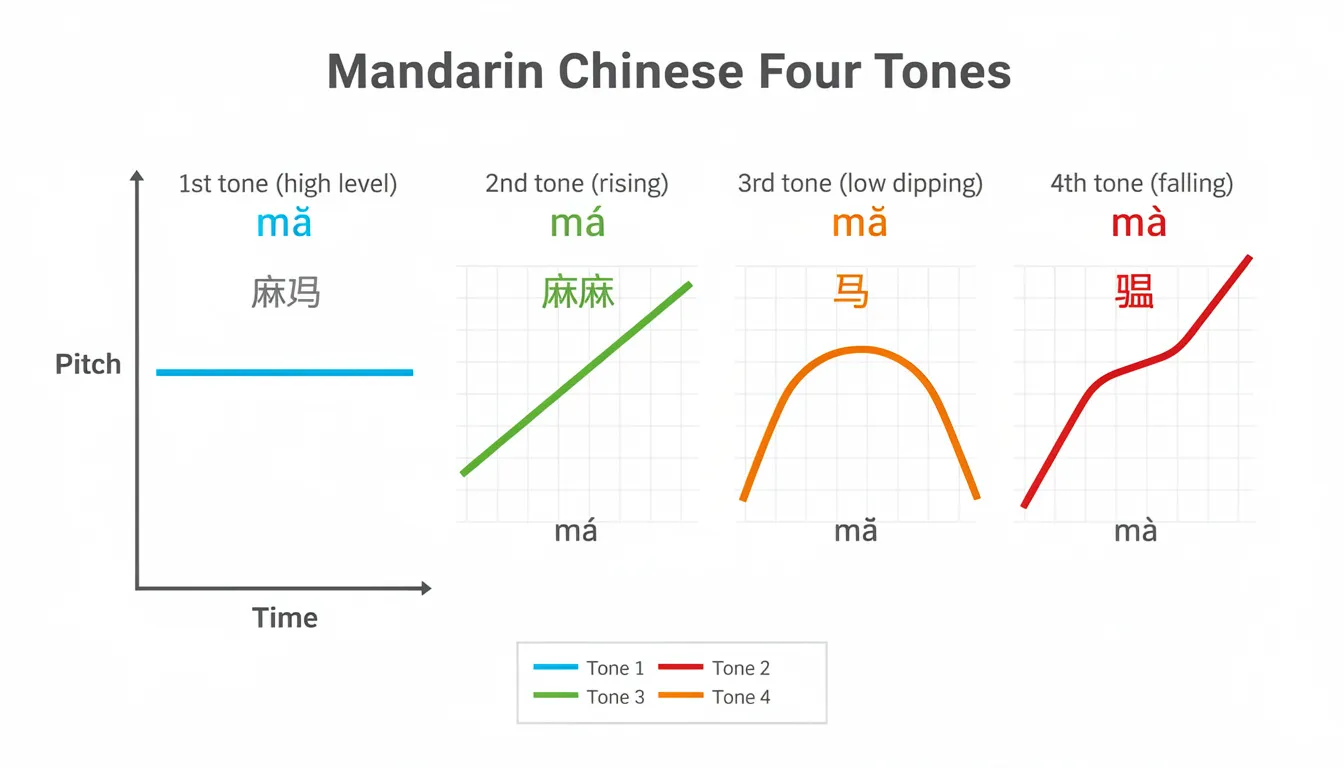
Listen to tone comparison exercises for 15-20 minutes daily. Focus particularly on minimal pairs – words that differ only in tone, such as 妈 (mā, mother), 麻 (má, hemp), 马 (mǎ, horse), and 骂 (mà, scold). Understanding these distinctions prevents embarrassing miscommunications and builds confidence in speaking chinese.
Effective vocabulary acquisition requires systematic approach rather than random memorization. Smart chinese language learners prioritize high-frequency words and build expanding networks of related terms.
Start with the 100 most common chinese words and HSK Level 1 vocabulary, which includes 150 essential terms. These words appear in virtually every chinese conversation and provide the foundation for more complex communication. Focusing on these high-frequency words is an efficient way to learn Chinese, as it quickly builds a strong foundation for understanding and communication. Priority words include 是 (shì, to be), 在 (zài, at/in), 有 (yǒu, to have), 可以 (kěyǐ, can/may), 我 (wǒ, I/me), 你 (nǐ, you), and 他/她 (tā, he/she).
Learn numbers 1-100, days, months, and time expressions early, as these appear constantly in daily life conversations. Numbers in chinese follow logical patterns that make them relatively easy to master. Once you know 一 through 十 (1-10), you can construct any number up to 99 using simple combinations.
Focus on high-frequency words that appear across multiple contexts. Research shows that knowing the 1,000 most common chinese words enables understanding of approximately 85% of typical conversations, while 2,000 words push comprehension to over 95%.
Use spaced repetition apps like Anki or Memrise for vocabulary retention. These apps present words just as you’re about to forget them, maximizing long-term retention while minimizing study time. Techniques such as mnemonic devices, visualization, and storytelling can be combined with these tools for enhancing memory and improving long-term retention of Chinese vocabulary. Create custom decks based on your interests and goals, or download pre-made HSK vocabulary sets.
Create personal word lists based on your specific interests and goals. If you’re interested in business, prioritize commercial terms. If you enjoy cooking, focus on food and kitchen vocabulary. This personalized approach maintains motivation while building practical skills you’ll actually use.
Practice using new words in simple sentences immediately after learning them. Don’t just memorize isolated vocabulary – practice phrases like 我有一个朋友 (wǒ yǒu yī gè péngyǒu, I have a friend) or 今天天气很好 (jīntiān tiānqì hěn hǎo, today’s weather is very good). This contextual practice accelerates retention and prepares you for real conversations.
Chinese characters intimidate many beginners, but understanding their systematic structure makes them manageable and even enjoyable to learn. Mastering characters is a crucial step in studying Chinese, as it builds the foundation for overall language proficiency. Successful character learning combines understanding of components with consistent writing practice.
Start with 50 most common radicals to understand character structure and meaning patterns. Radicals like 人 (person), 水 (water), 火 (fire), 木 (wood), and 心 (heart) appear in hundreds of characters and provide semantic clues about meaning. Learning radicals first makes memorizing complex characters significantly easier.
Learn proper stroke order using apps like Skritter or Pleco’s stroke order feature. Correct stroke order isn’t just traditional – it makes characters more legible and helps with memorization by creating muscle memory patterns. Generally, strokes proceed from left to right, top to bottom, with horizontal strokes before vertical strokes.
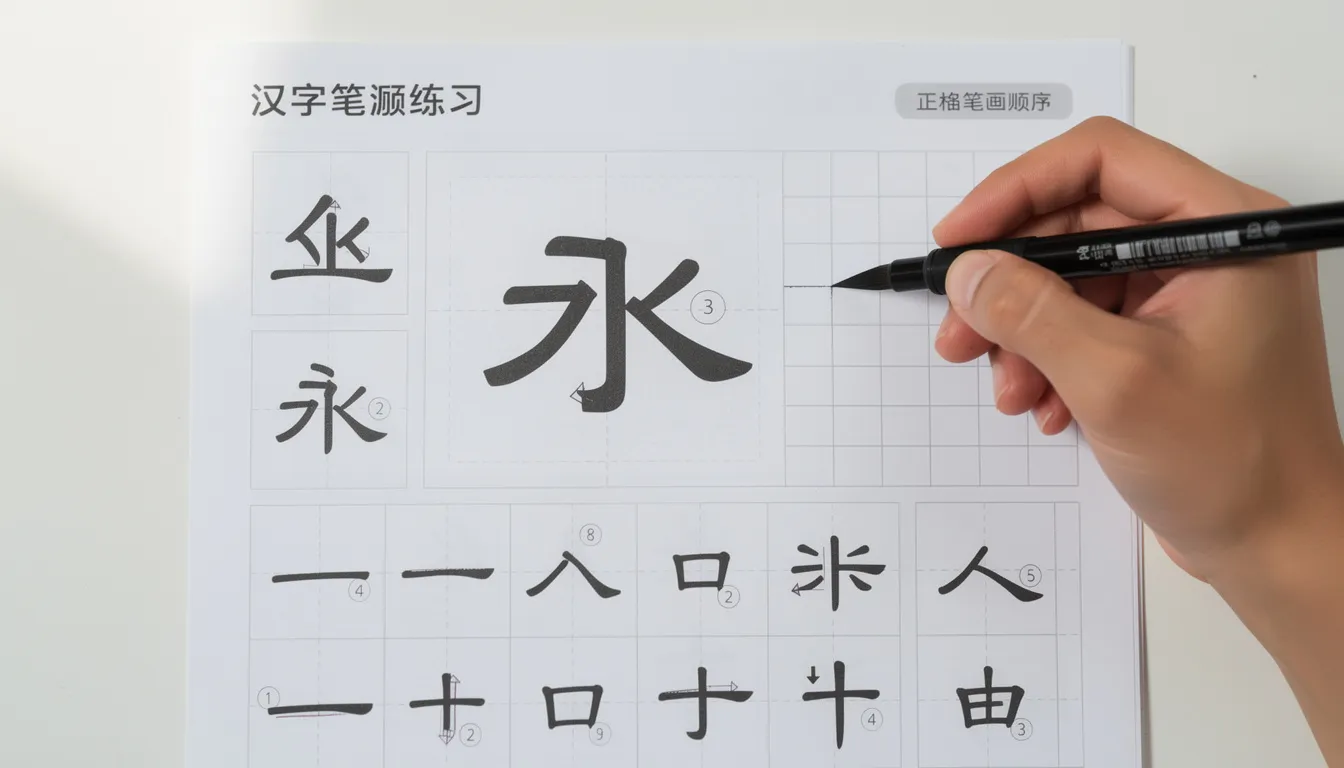
Practice writing characters on paper with proper proportions rather than relying solely on digital input. Physical writing engages different neural pathways than typing and significantly improves character recognition and recall. Start with simple characters and gradually work toward more complex forms.
Focus on character components and meaning patterns rather than memorizing characters as random drawings. Most chinese characters combine meaning components (radicals) with pronunciation hints (phonetics). Understanding these patterns helps predict meanings and pronunciations of unfamiliar characters.
Use the “character stories” method to create memorable associations for complex characters. For example, 休 (rest) combines 人 (person) and 木 (tree) – a person resting against a tree. These visual mnemonics make abstract characters concrete and memorable.
Begin with simple characters like 人 (rén, person), 大 (dà, big), 小 (xiǎo, small), 上 (shàng, up), 下 (xià, down), and 中 (zhōng, middle). These fundamental characters appear in countless compounds and teach essential stroke patterns that apply to more complex forms.
Popular apps are essential tools for learning Chinese, widely used by learners for their convenience, features, and effectiveness in preparing for travel or mastering the language.
Modern technology provides unprecedented access to high-quality chinese language learning tools. Smart learners leverage multiple apps and platforms to create comprehensive study systems.
Pleco dictionary app serves as the essential reference tool for any chinese learner. This comprehensive dictionary offers instant character lookup through camera scanning, handwriting recognition, or pinyin input. The audio pronunciations help perfect your accent, while example sentences demonstrate proper usage in context.
HelloChinese provides structured lessons with speech recognition technology that evaluates your pronunciation in real-time. The gamified progression system maintains motivation while covering essential grammar and vocabulary systematically. The app’s conversation practice features prepare you for interactions with native speakers.
Rosetta Stone is a well-known language learning software that uses visual cues and speech prompts to teach Chinese. While it offers a structured approach, some users find its interactivity limited and its pronunciation assessment less accurate compared to other options.
Anki flashcards enable efficient spaced repetition vocabulary practice customized to your learning pace. Create decks for HSK levels, personal interest vocabulary, or difficult characters that need extra attention. The algorithm ensures you review words just as you’re about to forget them.
Yabla Chinese offers authentic video content with interactive subtitles and vocabulary tools. Watch chinese TV shows, news, and cultural content while clicking on any word for instant definitions and pronunciation guides. This immersive approach builds listening skills while expanding cultural knowledge.
ChineseSkill gamifies the learning experience with interactive exercises covering pronunciation, characters, and grammar. The progressive difficulty system adapts to your level while maintaining engagement through achievements and competition features.
For even more effective progress, consider finding a mandarin tutor through online platforms for personalized, one-on-one instruction tailored to your needs.
ChineseGrammarWiki.com provides comprehensive grammar explanations with clear examples and practice exercises. Unlike textbooks that introduce grammar randomly, this resource organizes patterns by difficulty level and provides practical usage guidelines for each structure.
YouTube channels offer diverse content for all learning styles. ChinesePod provides structured lessons for systematic progression. Learn Chinese with Emma focuses on practical conversation skills. Mandarin Corner offers authentic conversations with detailed explanations that bridge the gap between textbook chinese and real-world usage.
Coursera courses like “Chinese for Beginners” by Peking University provide structured university-level instruction accessible from anywhere. These courses combine video lectures, interactive exercises, and peer feedback to create comprehensive learning experiences comparable to traditional chinese classes. For additional guidance and speaking practice, consider finding a language teacher through online platforms such as italki, where you can connect with native or experienced instructors to further enhance your learning.
FluentU transforms authentic chinese video content into interactive learning experiences with clickable subtitles, vocabulary lists, and comprehension exercises. Watch chinese movies, TV shows, and news while building vocabulary and cultural understanding simultaneously.
DuChinese offers graded reading materials with audio recordings that develop reading skills progressively. Stories range from beginner level with pinyin support to advanced articles on contemporary chinese society, allowing steady progression without overwhelming difficulty jumps.
Interested in app? Check out our article on The 6 best apps for Chinese learning
Chinese grammar is refreshingly straightforward compared to many other foreign languages, making it accessible for new learners. Most Chinese sentences follow a simple subject-verb-object (SVO) structure, similar to English. Unlike many languages, Chinese verbs do not change form for tense or subject, which means you don’t have to memorize complex conjugation tables. Instead, time and aspect are often indicated by adding specific words or context, streamlining the process of building sentences.
However, the Chinese writing system presents its own set of challenges. To learn Chinese characters, you’ll need to become familiar with thousands of unique symbols. In mainland China, simplified Chinese characters are used, while traditional characters are standard in places like Taiwan and Hong Kong. Regular practice is key to mastering both recognition and writing of these characters. Many language learners find success by using online resources such as character writing apps, interactive websites, and digital flashcards to reinforce their skills.
Listening to native speakers and practicing with a language partner can greatly improve your pronunciation and intonation, helping you sound more natural when you speak. Engaging with native speakers, whether through online exchanges or in-person conversations, allows you to hear authentic Chinese grammar in action and pick up on subtle nuances. By combining consistent writing practice, active listening, and the use of high-quality online resources, you’ll build a strong foundation in Chinese grammar and sentence structure, setting yourself up for long-term success in your language learning journey.
Listening comprehension forms the foundation for speaking ability and overall fluency. Systematic listening practice develops the ear for chinese tones, rhythm, and natural speech patterns.
Start with slow, clear pronunciation from learning materials designed for beginners before progressing to natural speech speeds. Apps like ChinesePod offer lessons recorded at learner-friendly speeds with clear articulation that helps distinguish individual words and tones.
Listen to chinese podcasts regularly to develop familiarity with natural speech patterns. Coffee Break Chinese offers 15-minute episodes perfect for commuting or exercise time. Mandarin Monkey provides entertaining stories that maintain interest while exposing you to diverse vocabulary and cultural content.
Watch chinese content with chinese subtitles rather than english translations. Platforms like iQiyi, Viki, and YouTube offer extensive libraries of chinese programming. Watching movies in Chinese is an effective way to enhance listening skills and gain exposure to natural speech and cultural context. Start with content designed for children or learners before progressing to adult programming with complex dialogue and cultural references.
Use shadowing technique by repeating after audio immediately without pausing. This practice develops pronunciation, rhythm, and intonation while building listening skills simultaneously. Start with simple sentences and gradually work toward longer passages as your skills improve.
Progress from children’s songs to news broadcasts as your listening ability develops. Children’s programming uses simple vocabulary and clear pronunciation, making it ideal for building foundational skills. Listening to real life conversations and authentic audio is essential to prepare for practical, everyday situations. News broadcasts represent the pinnacle of listening difficulty with rapid speech, specialized vocabulary, and cultural references.

Practice listening for 15-20 minutes daily with focused attention rather than passive background exposure. Active listening requires concentration on understanding meaning, identifying new vocabulary, and recognizing speech patterns. This focused practice produces faster improvement than hours of unfocused exposure.
Developing speaking skills independently requires creativity and systematic practice. Self-taught learners must create opportunities for output and feedback that traditional chinese classes provide naturally.
Practice self-talk in chinese during daily activities like cooking, commuting, or exercising. Describe your actions, thoughts, and surroundings using vocabulary and grammar patterns you’ve learned. This low-pressure practice builds fluency without fear of judgment or embarrassment. Make it a habit to speak Chinese as much as possible, even outside formal study sessions, to reinforce your language skills.
Find language exchange partners on HelloTalk, Tandem, or similar apps that connect chinese learners with english learners. These platforms enable text, voice, and video conversations with native chinese speakers who want to practice english, creating mutually beneficial learning experiences.
Use voice recording apps to practice pronunciation and compare your speech with native speakers. Record yourself reading passages, having imaginary conversations, or practicing specific sounds that challenge you. Regular recording reveals improvement over time and identifies persistent pronunciation issues.
Read aloud from textbooks and online materials for 10-15 minutes daily to develop speaking fluency and pronunciation accuracy. This practice bridges the gap between knowing vocabulary and producing it naturally in conversation. Focus on clear articulation and proper tone production rather than speed.
Practice common conversational scenarios like ordering food, asking directions, introducing yourself, or discussing weather. Role-play both sides of conversations to prepare for real interactions with chinese people. This preparation builds confidence and provides ready phrases for actual conversations.
Join online chinese speaking groups or forums where learners practice together through video calls or voice messages. Many chinese language learners participate in informal conversation groups that provide supportive environments for practicing speaking skills without the pressure of formal instruction. Immersing yourself in the target language during these sessions helps you internalize vocabulary, sentence structure, and natural usage.
Reading skills develop gradually from character recognition to comprehensive understanding of complex texts. Strategic progression prevents overwhelm while building solid comprehension abilities.
Begin with graded readers designed specifically for your HSK level rather than jumping into authentic materials too early. These books use controlled vocabulary and gradually introduce new characters and grammar patterns, ensuring comprehensible input that promotes learning rather than frustration.
Read children’s books with pinyin alongside chinese characters to build confidence and familiarity with common vocabulary. Chinese children’s literature uses high-frequency characters and simple sentence structures while telling engaging stories that maintain interest and motivation.
Use The Chairman’s Bao for news articles adapted to different difficulty levels. This platform takes current chinese news and rewrites articles for beginning, intermediate, and advanced learners. You can track your progress by gradually reading higher levels of the same stories.
Practice reading both simplified and traditional characters if your goals include understanding material from Taiwan, Hong Kong, or historical texts. While most beginners should focus on simplified chinese characters initially, exposure to traditional characters expands your reading ability across all chinese-speaking regions.
Keep a reading journal with new words and phrases encountered during reading practice. Write down characters you don’t recognize, interesting grammar patterns, and cultural references that require further research. Regular review of these notes reinforces learning and builds comprehensive vocabulary.
Set progressive reading goals starting with five sentences, then paragraphs, then full articles. Celebrate achievements at each level rather than becoming discouraged by material that remains too difficult. Consistent progress at appropriate levels builds skills more effectively than struggling with overly challenging texts.
Flashcards are one of the most effective tools for learning Chinese because they train recognition, recall, and spaced repetition all at once. To use them well, start by creating cards that show only the character on the front and the pinyin, tone, and meaning on the back. When reviewing, force yourself to say the pronunciation and tone out loud before flipping. Mix character-to-meaning, meaning-to-character, and character-to-pinyin cards so you strengthen all skills. Use a spaced-repetition app like Anki so harder words appear more often and easy ones show up less. Reviewing 10–15 minutes daily builds quick, long-term progress.
Systematic scheduling ensures consistent progress while preventing burnout and maintaining motivation over months and years of learning chinese.
Design a weekly schedule with specific goals for each study session rather than vague “study chinese” time blocks. Monday/Wednesday/Friday might focus on learning new vocabulary and practicing character writing. Tuesday/Thursday could emphasize listening practice and pronunciation work. Weekend sessions might concentrate on reading comprehension and cultural content.
Monday/Wednesday/Friday: Focus on new vocabulary and characters with dedicated time for learning 5-10 new words, practicing character writing, and reviewing spaced repetition flashcards. These sessions build the foundation vocabulary necessary for all other skills.
Tuesday/Thursday: Emphasize listening and speaking practice through podcast listening, shadowing exercises, conversation practice with language partners, and pronunciation work. These sessions develop the productive and receptive skills that enable real communication.
Saturday: Reading comprehension and grammar review with longer reading sessions, grammar pattern practice, and review of challenging concepts from the week. Weekend sessions allow more extended focus on complex skills that require sustained attention.
Sunday: Cultural content and light review through chinese movies, TV shows, music, or cultural articles that maintain motivation and provide context for language learning. This enjoyable content reinforces learning while preventing study fatigue.
Track your study hours and progress weekly using apps, journals, or simple charts that visualize your commitment and improvement. Many successful chinese language learners maintain study logs that help identify productive strategies and maintain accountability.
Adjust schedule based on your strengths and weaknesses as you discover which skills need extra attention. If tones remain challenging, increase daily tone practice time. If character writing needs work, add extra writing sessions to your routine.
Independent learning presents unique obstacles that traditional chinese classes address through instructor guidance and peer interaction. Recognizing these challenges enables proactive solutions.
Combat isolation by joining online chinese learning communities, forums, or social media groups where learners share experiences, ask questions, and celebrate achievements. Communities like r/ChineseLanguage on Reddit or specialized Facebook groups provide support and accountability that solo study lacks.
Address pronunciation issues with regular recording and feedback through language exchange partners or pronunciation apps. Self-taught learners often develop persistent pronunciation errors without realizing it, making external feedback crucial for accurate mandarin chinese pronunciation.
Prevent overwhelm by limiting daily new content to 5-10 words or 2-3 grammar patterns maximum. Beginning learners often attempt to memorize too much new material simultaneously, leading to poor retention and discouragement. Gradual, consistent progress outperforms intensive cramming.
Maintain motivation by celebrating small wins and setting intermediate milestones rather than focusing only on distant fluency goals. Learning 100 words, completing an HSK level, or having your first 10-minute conversation in chinese are significant achievements worth recognizing and celebrating.
Handle character confusion by focusing on radicals and character components rather than memorizing each character as an isolated symbol. Understanding systematic patterns makes character learning manageable and prevents the overwhelming feeling that chinese characters are impossibly complex.
Manage frustration with tones through consistent daily practice rather than intensive cramming sessions. Tone production improves gradually through muscle memory development, requiring patience and persistent practice rather than forced perfection.
Regular assessment keeps your chinese language learning on track and provides motivation through visible improvement over time.
Take HSK practice tests every 3 months to assess your level objectively and identify areas needing additional focus. The hanyu shuiping kaoshi provides standardized benchmarks that help you understand your progress compared to international proficiency standards.
Set specific vocabulary milestones: 500 words in 3 months, 1000 in 6 months, 2000 in one year. These concrete goals provide clear targets and enable celebration of achievements along the path toward fluency.
Record yourself speaking monthly to track pronunciation improvement and speaking fluency development. Compare recordings over time to hear clear evidence of progress that daily practice makes difficult to notice.
Time your reading speed and comprehension regularly using the same types of materials. Track how quickly you can read and understand beginner, intermediate, and advanced texts as your skills develop.
Keep a learning diary to reflect on challenges, achievements, and effective study strategies. Written reflection helps identify patterns in your learning process and documents your journey from complete beginner to competent chinese speaker.
Use chinese proficiency self-assessment tools available online to gauge your abilities across listening, speaking, reading, and writing skills. These assessments provide detailed feedback about specific areas of strength and weakness.
Once you’ve mastered basic skills, advanced techniques accelerate progress toward true fluency and cultural competence. As you advance, take a moment to reflect on how you started learning Mandarin—perhaps through listening activities or building auditory familiarity—and consider how your methods and strategies have evolved since those early days.
Immerse yourself in chinese media including dramas, music, news, and social media content. Advanced learners benefit from exposure to authentic materials that demonstrate how chinese people actually communicate in various contexts and registers.
Change your phone’s language settings to chinese to force daily interaction with the language in practical contexts. This simple change requires you to navigate familiar apps and functions using chinese vocabulary, reinforcing common terms through repeated exposure.
Find chinese pen pals for written practice through email, messaging apps, or language exchange platforms. Written communication develops formal language skills while building friendships with native speakers who can provide cultural insights and language correction.
Attend virtual chinese cultural events and webinars to practice listening skills while learning about contemporary China. Universities, cultural organizations, and businesses regularly host online events that provide authentic listening practice with cultural content.

Read chinese social media posts and comments for exposure to colloquial language, slang, and internet culture. Platforms like Weibo offer authentic glimpses into how young chinese people actually communicate, including abbreviations, trending topics, and cultural references.
Practice translating between english and chinese to develop deep understanding of both languages’ structures and cultural contexts. Translation work reveals subtle differences in expression and helps achieve true bilingual competence rather than just conversational ability.
Teaching yourself chinese demands dedication, strategy, and patience, but millions of successful self-taught learners prove it’s entirely achievable. By following this comprehensive guide, utilizing quality learning material, and maintaining consistent daily practice, you can develop strong chinese skills without formal instruction.
Remember that language learning is a marathon, not a sprint. Focus on consistent progress rather than perfection, celebrate small victories along the way, and don’t be afraid to start speaking chinese from early in your journey. The key to success lies not in finding the perfect method, but in starting today and maintaining consistent effort over time.
Your journey to fluency begins with a single step. Choose one fundamental skill from this guide – whether it’s learning pinyin, practicing tones, or downloading your first app – and commit to 30 minutes of focused practice today. With dedication and the right approach, you’ll be amazed at how much progress you can make in teaching yourself chinese.
In conclusion, to learn Chinese successfully, you need dedication, persistence, and the right resources. Thanks to the wealth of online courses, language learning apps, and language exchange programs now available, it’s never been easier to start learning Chinese and make great progress. Setting realistic goals, practicing regularly, and immersing yourself in the language are all essential steps to developing your language skills.