Physical Address
304 North Cardinal St.
Dorchester Center, MA 02124
Physical Address
304 North Cardinal St.
Dorchester Center, MA 02124


In the age of smartphones and digital learning, mastering Chinese has never been more accessible—especially from outside China. Whether you’re a beginner or sharpening advanced skills, the right app can make all the difference in your Chinese learning journey. In this guide, we’ll explore top apps, what makes them stand out, how to choose based on your goals, and pitfalls to avoid.
With an app, you can learn Chinese anytime, anywhere—on a commute, during a break, or relaxing at home.
Many apps use AI, spaced-repetition systems, speech recognition, and progress tracking—features that traditionally required tutors.
Using apps gives you access to Chinese vocabulary, characters, pronunciation, and insights into Chinese language use—helping you understand modern Chinese in a globalized China context.
Tip: Treat your app like a daily habit rather than a casual tool—consistency beats intensity when learning Chinese.
Common Mistake: Relying solely on an app for immersion—apps are excellent, but should be supplemented by real‐world interaction, reading Chinese content, speaking with natives, or travel.
Here are some factors to consider when evaluating Chinese learning apps:
Tip: Test a free version or trial first. Spend 5–10 minutes evaluating if you feel engaged, motivated, and able to use it consistently.
Common Mistake: Choosing an app just because it’s popular—popularity doesn’t guarantee fit for your personal learning style or Chinese learning goals.
Here are selected high-quality apps for Chinese learning, each with a strong track record and affiliate program options. While full affiliate link details follow below, each app has an established affiliate network.

HelloChinese remains one of the best all-round tools for learning Mandarin, combining fun gameplay with serious learning. The app is specifically designed for Mandarin Chinese, meaning every feature — from pronunciation tools to grammar lessons — is optimized for tone-based learning.
Lessons progress through beginner, intermediate, and advanced levels, following HSK-aligned content. The speech recognition system is accurate and ideal for tone correction, while the AR-based writing trainer helps learners perfect stroke order interactively.
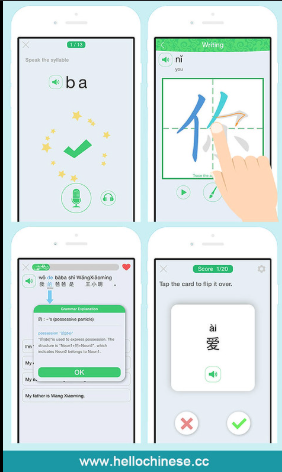
Cultural notes and dialogues teach you how Chinese is used naturally in social and professional contexts, building not only language but also cultural literacy.
Best for: learners who want a full-featured Mandarin program that builds speaking, reading, and writing skills in sync.
Tip: Use HelloChinese as your foundation and combine it with real conversation practice on HelloTalk or immersion via DuChinese.
ChineseSkill delivers an addictive, visual learning experience for anyone starting their Mandarin journey. Lessons are short, well-paced, and packed with visuals that help build memory retention through pattern recognition.
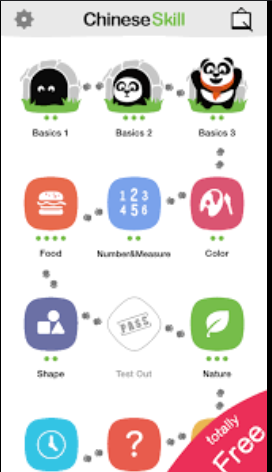
Each unit covers grammar, vocabulary, speaking, and writing, but focuses heavily on reading and recognition — perfect for visual learners. The tone training exercises and writing demos make it a great supplement for beginners before tackling more advanced apps.
Best for: visual and casual learners who prefer short, interactive sessions that make learning feel like a game.
Tip: Use ChineseSkill to establish a strong base, then move to reading-based platforms like The Chairman’s Bao for real content.

The Chairman’s Bao (TCB) bridges the gap between classroom Chinese and real-world fluency by providing graded news articles written by native Chinese teachers. Each article comes with pinyin, English translation, and professional audio narration, catering to every HSK level.
TCB teaches you to think in Chinese by exposing you to authentic sentence structures, idioms, and current events — helping you learn both language and culture simultaneously.
Its built-in flashcards, personalized word lists, and comprehension quizzes make it perfect for independent learners or teachers who want supplemental reading materials.
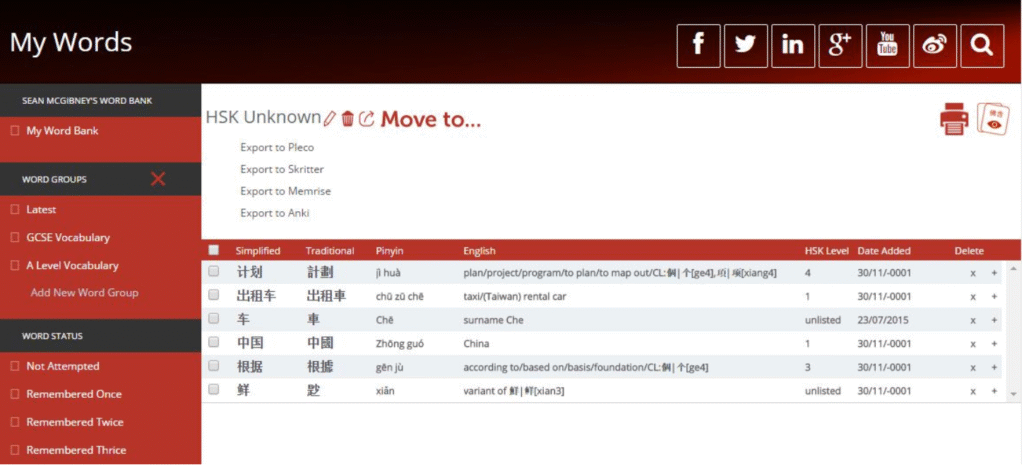
Best for: intermediate to advanced learners who want to strengthen reading comprehension and stay informed about life in China.
Tip: Try reading one short article daily — it builds both fluency and real-world vocabulary faster than textbook repetition.

Pleco is a must-have reference app for anyone serious about learning Chinese. Though it’s not a course-based platform, it’s the single most powerful dictionary and reading tool available.
Features like optical character recognition (OCR), stroke order animations, and instant word lookups make it indispensable for students, travelers, and translators. Its flashcard system lets users create custom decks from any text, while the document reader allows on-the-fly translation of websites or eBooks.
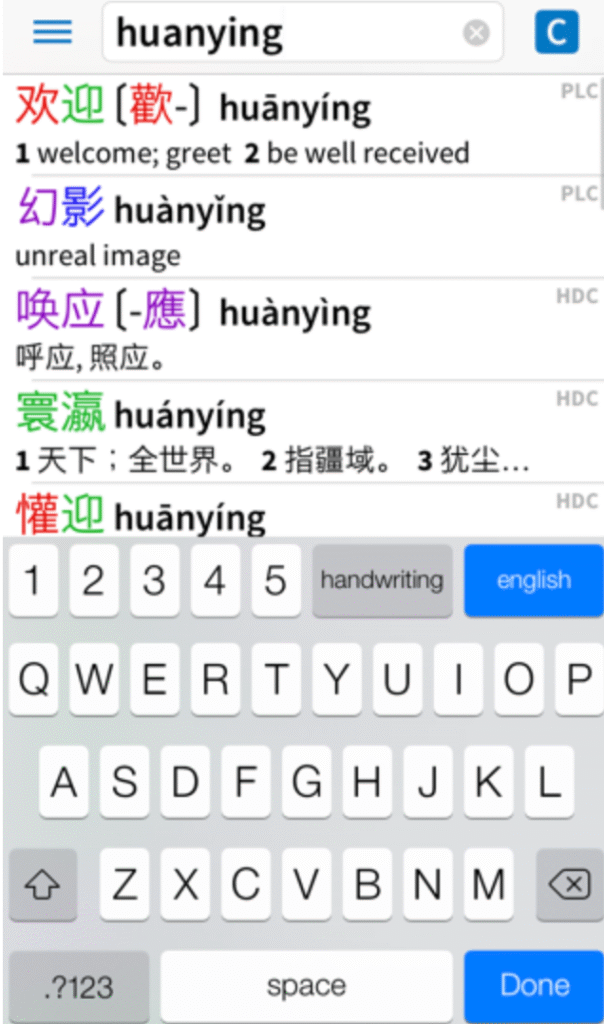
Best for: serious learners who need an all-purpose study companion, especially for reading, writing, or translating Chinese.
Tip: Keep Pleco open as your “always-on translator” while reading Chinese articles or chatting on HelloTalk.
DuChinese makes reading Chinese accessible and enjoyable, even for beginners. Its graded stories span levels from Newbie to Master, and include professional audio narration, pinyin, translations, and tone guides.
The app uses an interactive tap-to-translate system that makes it easy to read naturally without breaking your flow. Users can save new words to flashcards or review vocabulary later, reinforcing retention.
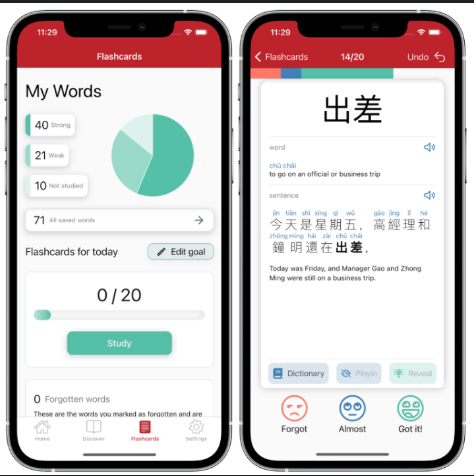
The stories are well-written and culturally rich, covering daily life, Chinese idioms, travel, and even traditional folklore.
Best for: learners looking to improve reading and listening comprehension through authentic, enjoyable content.
Tip: Use DuChinese for bedtime reading — it’s the perfect habit-building app for consistent improvement.
HelloTalk connects learners with real Chinese speakers for text, voice, and video exchanges. It’s one of the most social and organic ways to learn — by actually using Chinese in real conversations.
The built-in tools make communication smooth even for beginners: automatic translation, pronunciation playback, and correction functions allow both parties to teach each other effectively.
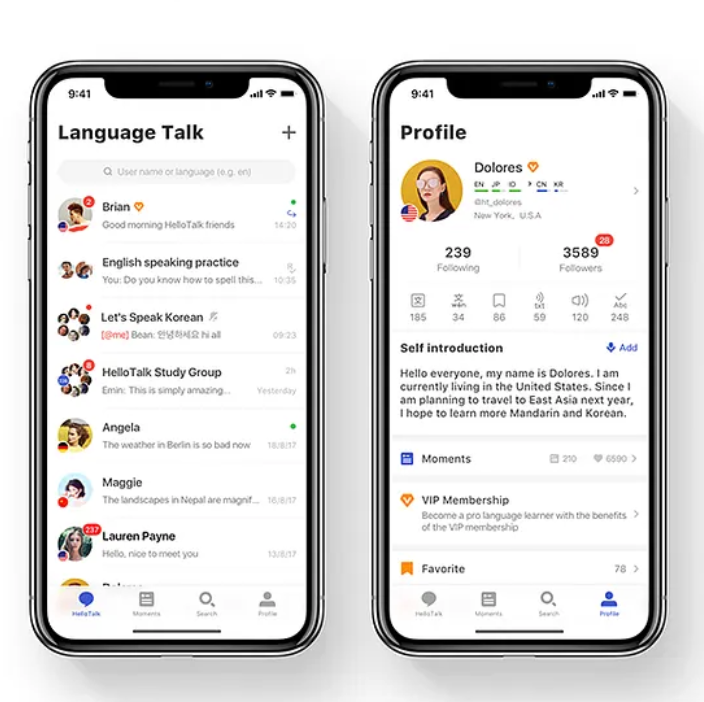
HelloTalk also includes “Moments,” a social feed where users can post in Chinese and receive feedback or corrections from native speakers — essentially turning your feed into a learning community.
Best for: learners seeking authentic conversation practice and cultural exchange with real native speakers.
Tip: Set learning goals — for example, 10 Chinese messages a day — to stay consistent and get measurable progress.
Use one or two apps: one strong in foundational skills (e.g., HelloChinese or ChineseSkill) + one for reading/listening (e.g., The Chairman’s Bao or DuChinese) + one for interaction (e.g., HelloTalk).
Spaced repetition (SRS) is key for vocabulary and characters. Use flashcard features (like Pleco or internal app tools) to reinforce what you learn.
While apps are great, supplement with:
Tip: When in China, turn your app off “offline mode” and practise in real context—like ordering food, reading signs, chatting.
Common Mistake: Relying on the “free” version and never upgrading—or worse, switching apps too often before finishing one level.

The six best apps for learning Chinese offer a mix of vocabulary building, grammar practice, listening comprehension, and speaking exercises suitable for beginners to advanced learners. Apps like Pleco and Anki are ideal for flashcard-based memorization, while Duolingo and HelloChinese provide interactive lessons and gamified learning. Skritter focuses on writing characters with stroke order practice, and ChineseSkill offers structured lessons covering speaking, listening, reading, and writing. By combining these tools, learners can efficiently reinforce vocabulary, practice pronunciation, and gain immersive exposure to Chinese in a convenient, mobile-friendly format.
Learning Chinese? Checkout our guides to the HSK system on our Language Page!