Basic Chinese Travel Phrases You’ll Actually Use

Why Learn Chinese Travel Phrases?

Traveling through China is an unforgettable adventure—majestic temples, bustling cities, mouthwatering street food, and breathtaking landscapes. But without knowing a few Chinese travel phrases, even simple things like ordering food or finding your hotel can get tricky.

Learning basic Mandarin phrases helps you:

  • Connect with locals
  • Avoid misunderstandings
  • Show respect for Chinese culture
  • Navigate confidently in any city or province

Whether you’re exploring Beijing, Shanghai, Chengdu, or Xi’an, these useful Chinese phrases will help you travel smoothly and sound more like a local.


Essential Mandarin Phrases for Travelers

These are the everyday expressions you’ll use most often during your trip to China.

Common Greetings and Courtesies

Politeness goes a long way in Chinese culture. Start with these essentials:

  • Hello – 你好 (Nǐ hǎo)
  • Thank you – 谢谢 (Xièxiè)
  • You’re welcome – 不客气 (Bú kèqi)
  • Excuse me / Sorry – 对不起 (Duìbuqǐ)
  • Goodbye – 再见 (Zàijiàn)
  • Yes – 是 (Shì)
  • No – 不是 (Bú shì)

🧭 Tip: Smile and nod when using greetings—it’s considered friendly and polite.


Asking for Help or Directions

You’ll need these Chinese phrases for tourists when navigating cities or public transport.

  • Where is the subway? – 地铁在哪儿?(Dìtiě zài nǎr?)
  • How do I get to the airport? – 去机场怎么走?(Qù jīchǎng zěnme zǒu?)
  • Is it far? – 远吗?(Yuǎn ma?)
  • Please help me – 请帮我 (Qǐng bāng wǒ)
  • I’m lost – 我迷路了 (Wǒ mílù le)

💡 Common Mistake: Many beginners say “nǎlǐ” instead of “nǎr.” The latter is more natural in Mainland China Mandarin.


Taking Taxis and Transport

China’s cities are huge, and taxi drivers often don’t speak English. These Mandarin phrases for travelers are lifesavers:

  • Please take me to this address – 请带我去这个地址 (Qǐng dài wǒ qù zhège dìzhǐ)
  • Stop here, please – 请在这里停 (Qǐng zài zhèlǐ tíng)
  • How much does it cost? – 多少钱?(Duōshao qián?)
  • I’m going to the train station – 我要去火车站 (Wǒ yào qù huǒchē zhàn)
  • Do you use a meter? – 你打表吗?(Nǐ dǎ biǎo ma?)

👉 Pro Tip: Always carry your hotel name in Chinese characters—most taxi drivers can’t read Pinyin.


Ordering Food and Drinks

Chinese cuisine is a highlight of any trip—but menus are rarely in English outside tourist zones. Use these useful Chinese phrases to order with confidence:

At a Restaurant

  • I’d like to order – 我要点菜 (Wǒ yào diǎn cài)
  • This one, please – 我要这个 (Wǒ yào zhège)
  • I don’t eat meat – 我不吃肉 (Wǒ bù chī ròu)
  • Can I have chopsticks? – 可以给我筷子吗?(Kěyǐ gěi wǒ kuàizi ma?)
  • The food is delicious – 很好吃!(Hěn hǎo chī!)

At a Café or Bar

  • A cup of coffee, please – 请给我一杯咖啡 (Qǐng gěi wǒ yī bēi kāfēi)
  • Water, please – 请给我水 (Qǐng gěi wǒ shuǐ)
  • Cheers! – 干杯!(Gānbēi!)

🧋 Traveler’s Tip: Try local drinks like milk tea (奶茶 nǎichá) or soy milk (豆浆 dòujiāng).


Hotel and Accommodation Phrases

Whether checking in or asking for room service, these basic Mandarin phrases will make your stay smoother.

  • I have a reservation – 我有预订 (Wǒ yǒu yùdìng)
  • I’d like to check in – 我要办理入住 (Wǒ yào bànlǐ rùzhù)
  • Where is my room? – 我的房间在哪儿?(Wǒ de fángjiān zài nǎr?)
  • Can you clean the room? – 可以打扫房间吗?(Kěyǐ dǎsǎo fángjiān ma?)
  • I need Wi-Fi – 我需要无线网 (Wǒ xūyào wúxiàn wǎng)

🔐 Common mistake: Don’t confuse “房子 (fángzi)” (house) with “房间 (fángjiān)” (room).


Shopping and Bargaining

In Chinese markets, bargaining is normal—and fun! Try these useful Mandarin phrases for shopping:

  • How much is this? – 这个多少钱?(Zhège duōshao qián?)
  • Too expensive! – 太贵了!(Tài guì le!)
  • Can it be cheaper? – 可以便宜一点吗?(Kěyǐ piányi yīdiǎn ma?)
  • I’ll take it – 我要了 (Wǒ yào le)
  • Do you accept card or cash? – 可以刷卡吗?(Kěyǐ shuākǎ ma?)

💰 Traveler’s Tip: Always carry cash—many small vendors don’t accept foreign cards or Alipay.


Emergency and Health Phrases

Hopefully, you won’t need these, but it’s good to know them:

  • Help! – 救命!(Jiùmìng!)
  • Call the police! – 报警!(Bàojǐng!)
  • I need a doctor – 我需要医生 (Wǒ xūyào yīshēng)
  • Where is the hospital? – 医院在哪儿?(Yīyuàn zài nǎr?)
  • I’m allergic to… – 我对……过敏 (Wǒ duì…guòmǐn)

🚑 Tip: Save your hotel’s address and embassy contact in both Chinese and English in your phone.


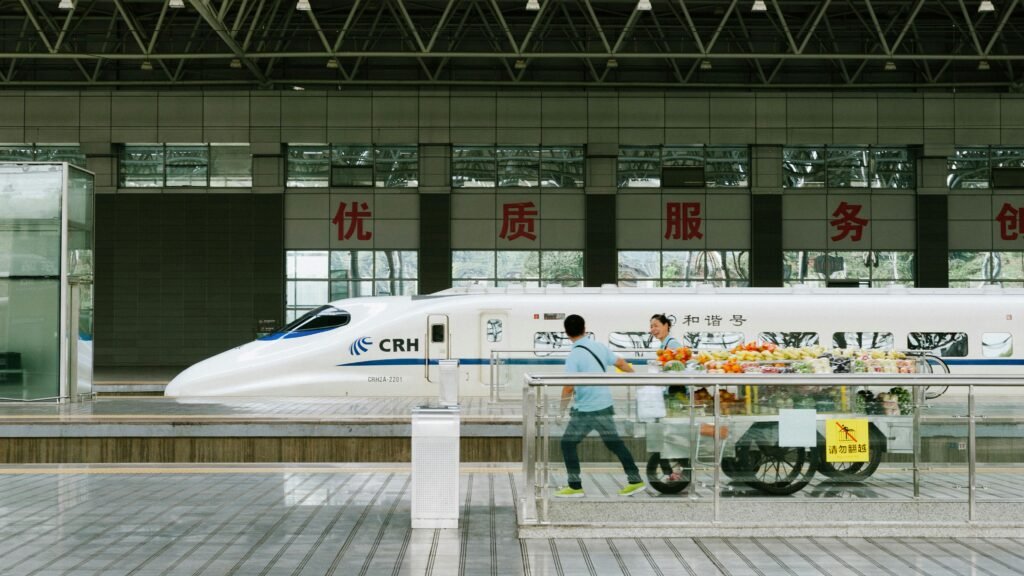
At the Airport or Train Station

Traveling in China often means long-distance trains or domestic flights. These phrases will help:
  • Where is the check-in counter? – 值机柜台在哪儿?(Zhíjī guìtái zài nǎr?)
  • What time is boarding? – 什么时候登机?(Shénme shíhòu dēngjī?)
  • Where is the restroom? – 洗手间在哪儿?(Xǐshǒujiān zài nǎr?)
  • Which platform? – 几号站台?(Jǐ hào zhàntái?)
  • My luggage is missing – 我的行李不见了!(Wǒ de xíngli bújiàn le!)

Frequently Asked Questions

Not strictly — you can absolutely travel through China without being fluent in Mandarin. However, learning basic Chinese travel phrases will make a huge difference in your experience.

Even a few simple expressions can help you:

  • Order food, ask for directions, or negotiate prices.
  • Communicate politely with locals, showing cultural respect.
  • Feel more confident in less touristy areas where English isn’t common.

You don’t need to master grammar — focus instead on practical survival phrases like:

  • “请问…” (qǐng wèn…) – Excuse me, may I ask…
  • “这个多少钱?” (zhège duō shǎo qián?) – How much is this?
  • “谢谢” (xièxie) – Thank you

Yes — in major cities such as Beijing, Shanghai, Guangzhou, and Shenzhen, many younger people and service staff speak basic English, especially in hotels, airports, and popular attractions. Signs in transportation systems are also available in English and Pinyin.

However, outside these big cities, English becomes rare. In smaller towns and rural areas, most people speak only Mandarin or local dialects. In those cases:

  • Simple Mandarin helps a lot.
  • Gestures, translation apps, and pictures can bridge the gap.
  • Locals are usually patient and eager to help, even if communication takes time.

If your goal is to pick up practical, travel-ready Mandarin, focus on active learning methods instead of just memorization. Here’s a proven approach:

  1. Use flashcards daily Apps like Quizlet, or HelloChinese are perfect for quick vocabulary drills.
  2. Practice with native speakers Platforms like HelloTalk or Tandem connect you with Chinese speakers for free language exchanges.
  3. Listen actively Watch short Chinese travel videos, podcasts, or dramas with subtitles to train your ear for tones and rhythm.
  4. Focus on speaking, not perfection Aim to be understood, not perfect — pronunciation improves through repetition, not hesitation.

Pronunciation Tips for Travelers

Mandarin pronunciation can feel challenging, but remember:

  • Focus on tones (4 main tones in Mandarin)
  • Practice with audio guides or apps
  • Don’t worry about perfection—clarity matters more

🎧 GoChinese.io Tip: Use GoChinese’s tone and pronunciation tools to master real-world listening and speaking before your trip.


Cultural Etiquette to Remember

Language goes hand-in-hand with culture. Here are a few travel in China etiquette notes:

  • Always hand items (like money or business cards) with both hands
  • Avoid loud voices in temples or restaurants
  • A small thank-you or nod goes a long way
  • Never write someone’s name in red—it’s considered unlucky

Final Thoughts — Speak With Confidence

Learning these Chinese travel phrases is about more than just communication—it’s about connection. You don’t need to be fluent to make a good impression. A few polite phrases show effort, curiosity, and respect for local culture.

Whether you’re ordering dumplings in Xi’an, bargaining in Chengdu, or finding your gate in Beijing, these basic Mandarin phrases will help you feel more confident and welcomed.

Keep practicing, stay curious, and explore China the way locals do—through language.


Summary

  • Learn basic Mandarin before your trip
  • Focus on greetings, directions, and food ordering phrases
  • Practice pronunciation and tones daily
  • Use GoChinese.io tools for interactive learning
  • Enjoy your journey — with confidence and connection

Interested in learning Mandarin?

Look into this article about the HSK 1 test and how you can improve your Mandarin learning easy and simple